Genial Care — A clinical platform that turned autism therapy into measurable outcomes
Design Lead, Founding Team (4th employee) · 2020–2023 · 0→1 · Web platform for clinicians
Impact at a glance:
+48% family quality of life / 87% adherence to the children development program / 94 NPS
Company surpassed R$60M in revenue
The problem
Autism care companies in Brazil was totally fragmented. Occupational therapy, speech therapy and behavior analysis didn't speak each others and kept their own records, often on paper or spreadsheets isolated.
Clinical leaders couldn't supervise quality consistently, therapists couldn't see the full picture of a child, and families had no clear evidence that therapy was working.
For a startup whose business was evidence-based care, this was the core problem to solve.
Strategy
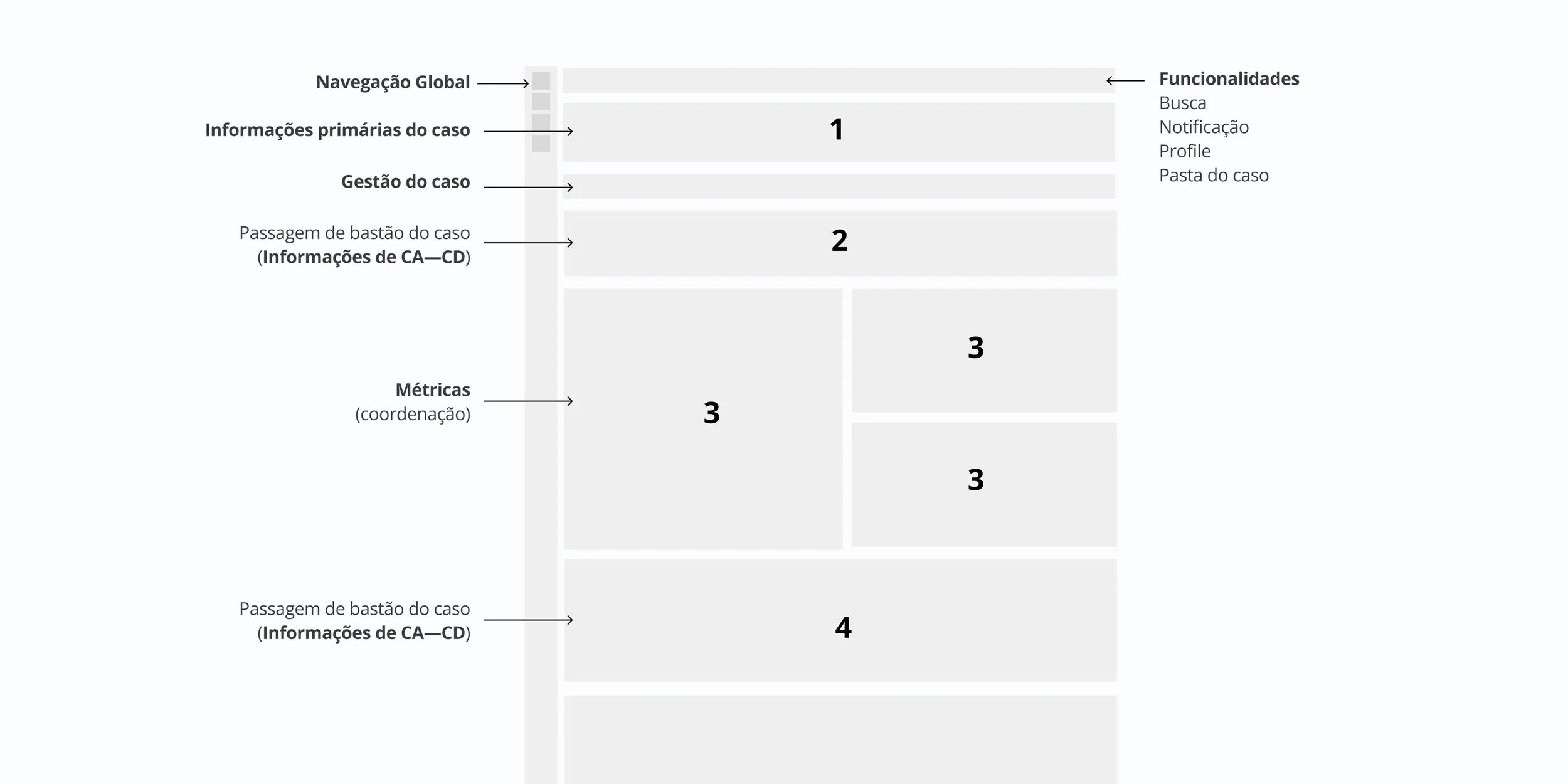
I joined as the fourth employee, before there was a product. My first job was to align the founding team (CEO, Clinical Lead, Product Lead and Community Lead) around what we were building. I ran MVPs focused on learn fast and then I had to lead design workshops and a Lean Inception to define what the service was and wasn't, what it would and wouldn't do, personas, key journeys, the MVP scope, roadmap and information architecture.
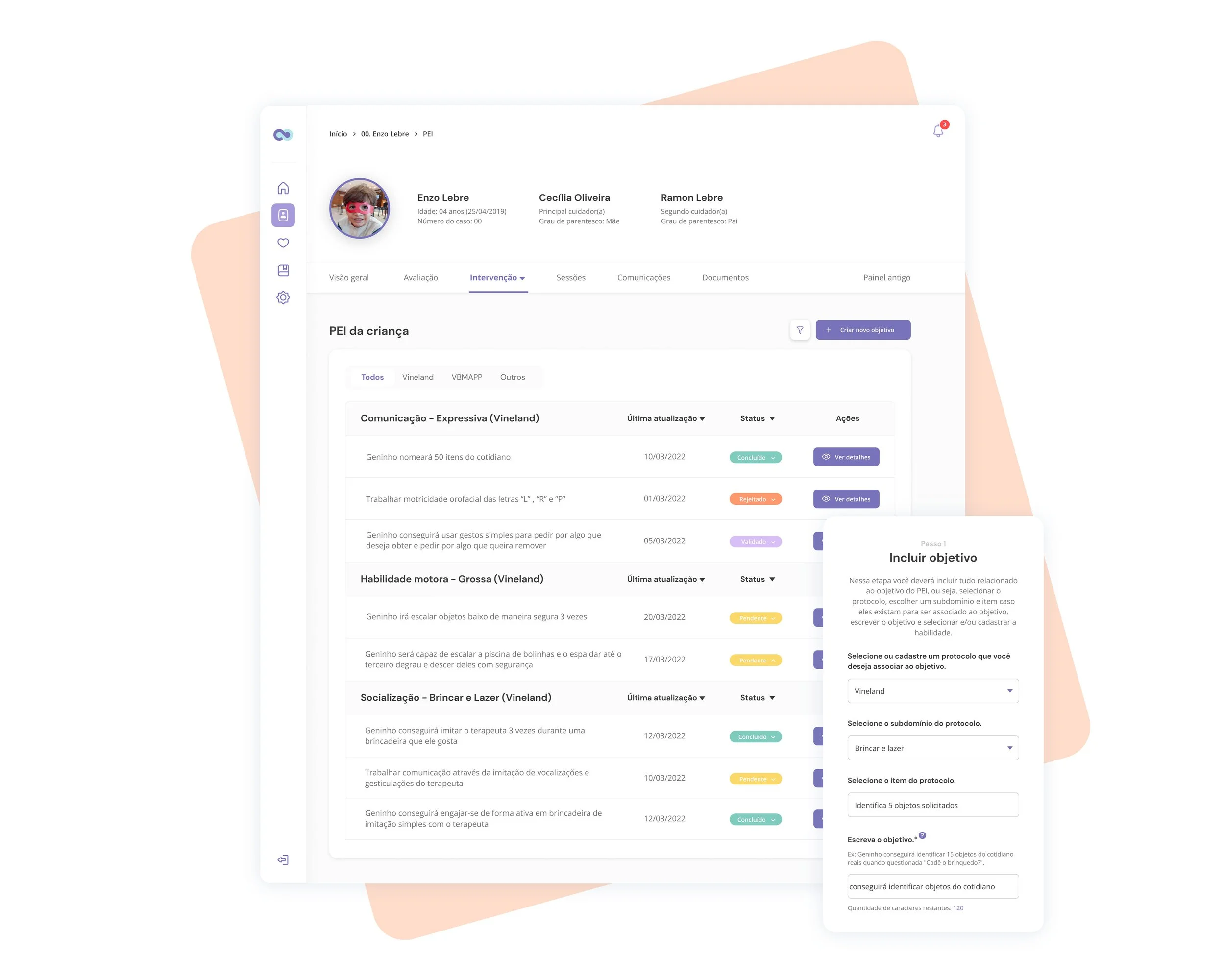
The key product decision came out of that work: the child's Individualized Education Program (IEP) would be the backbone of the entire product. Every session, clinical record and metric would connect to a skill goal in the child's plan. From that single data model, we built two products: this clinical platform for the internal team, and the family app for parents.

What I built
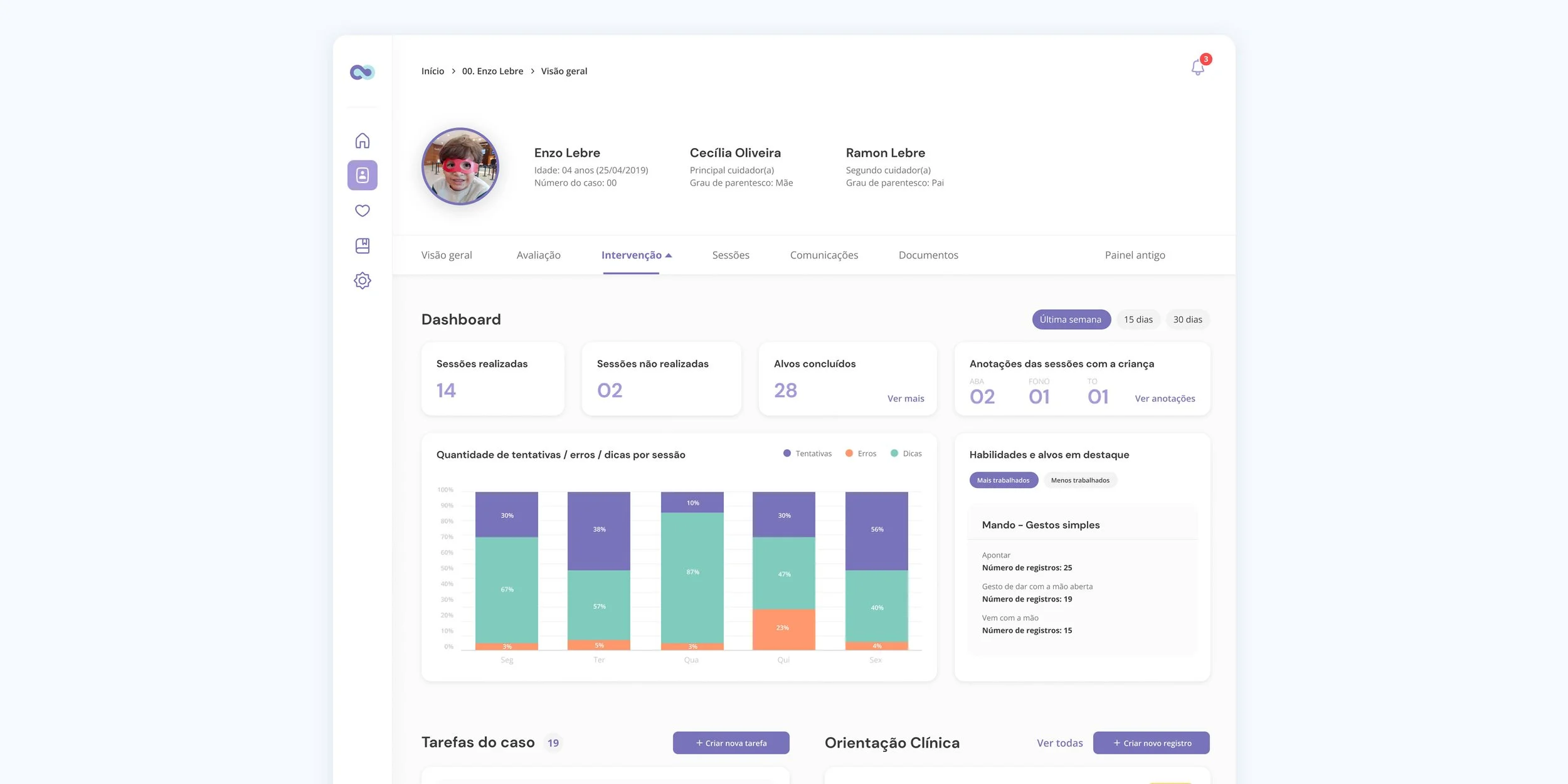
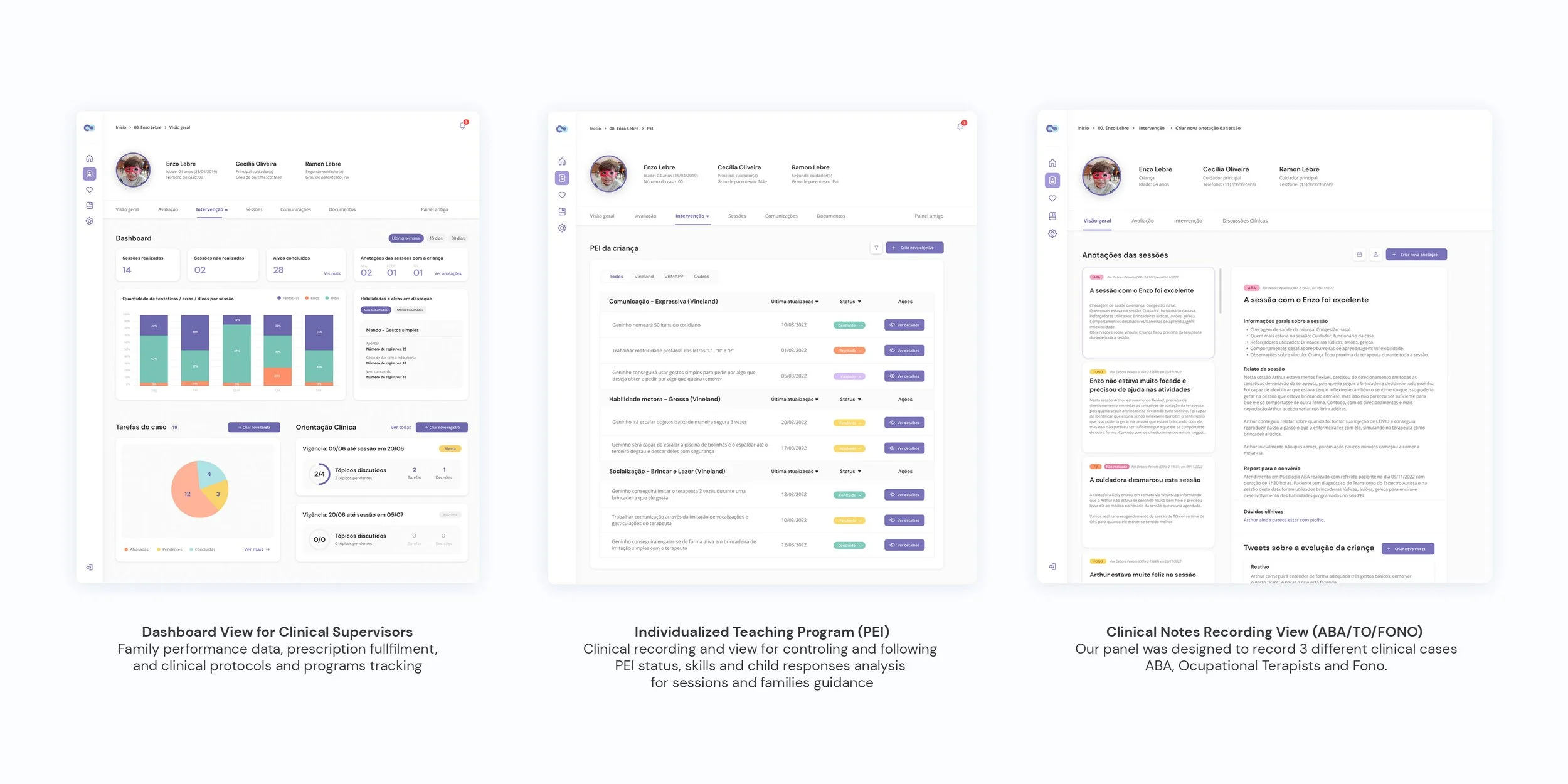
One program, three disciplines. Clinicians coordinators could create each family's program, define the skills to develop and record progress session by session, with occupational therapists, speech therapists and behavior analysts working on the same program.
Supervision built in. Records were visible across the clinical hierarchy (clinical leadership, coordination and senior clinicians), which turned supervision into part of the daily workflow instead of a separate process.
Designed for how therapists actually work. Recording during and right after sessions, minimal typing, and standardized structures so progress could be compared over time.
AI-assisted insights. Key metrics and follow-ups for each skill in the program, supporting the IEP review every three months.
Quality of life as a first-class metric. The family's quality of life was tracked alongside clinical progress in each 3 months follow-ups.
Impact
Clinical progress became measurable, comparable and auditable, for the first time in one place. Together with the family experience, the care model contributed to a 48% increase in family quality of life.
The platform became the data foundation of the company, which grew to more than R$60M in revenue and became a reference in neurodiversity care in Latin America.

Also, we achieved 87% adherence to the children development program (PEI) and a high standard service with 94 NPS measured recurrently.